
 Best Platforms
 Live Odds








How to Hedge Election Risk With Presidential Prediction Markets: 7 Steps
This step-by-step guide shows how to hedge presidential election risk with prediction-market contracts — decoding “president market” and the $1/$0 payoff model, confirming platform access, verifying the market’s settlement definition, setting a dollar hedge target, sizing and executing orders, and monitoring/exiting the position so the contract actually offsets your real-world downside.
You have a real financial downside if a specific person ends up in the White House, and you want a trade that pays if that outcome happens. The problem is that “the president market” can mean several different contracts, and small details in the rules can decide whether your hedge pays or not.
Get it wrong and you’re left with an expensive position that doesn’t line up with your exposure—or you discover too late that you can’t trade the venue, size the hedge, or exit cleanly. This guide gives you 7 executable steps to pick the right contract, verify settlement, set your hedge target, size shares, place orders, and manage the hedge through resolution.
Step 1: Define your hedge (what outcome hurts you, when, and how the contract pays)
When people search “president market,” they’re often mixing two completely different things. You’re here for a hedge: a trade that pays you cash if an election outcome that would hurt you actually happens.
A presidential prediction-market hedge is usually an event contract—a fixed-payout derivative tied to an outcome (typically YES/NO) that settles at $1 for the winning side and $0 for the losing side. That “$1 or $0” payoff is what lets you translate a political outcome into a clean dollar offset.
Decode “president market”
- If you meant Presidente (the grocery brand): that’s a retail search. There’s nothing to hedge.
- If you meant a presidential prediction market: you’re looking at tradable YES/NO contracts on an election outcome.
- Write your one-sentence hedge thesis (outcome → cash loss): “If [adverse presidential outcome] is true as defined by the contract, by [your decision date / expected settlement window], I lose $[amount] because [specific exposure]. I want a position that pays if that outcome happens.”
Contract payoff model
- Two sides: you buy YES if you want to be paid when the adverse outcome happens; otherwise you buy NO.
- Binary settlement: at resolution the contract pays $1 if you’re right, $0 if you’re wrong.
- Tradable pricing: contracts typically trade between $0.01 and $0.99.
- Implied probability: the market convention is to read a $0.60 YES price as roughly a 60% market-implied chance (subject to fees, spreads, and the venue’s structure).
- Why it hedges: if you buy the side that wins when your adverse outcome happens, your position is worth $1 per share at resolution—so the payout can offset the real-world loss.
- Know your max loss: on fully cash-collateralized venues, your worst-case loss is what you paid, because you don’t go into debt from the trade.
- Mechanical example: if YES is $0.60, the other side is $0.40, and together both sides add up to $1—the winner gets that $1 at resolution. See Kalshi’s overview of what event contracts are for the standard $1/$0 structure and pricing convention.
Step 2: Confirm access (pick a legal venue and the exact “president market” you can trade)
A hedge only works if you can actually hold the contract through resolution on a venue you’re allowed to use.
-
Start with your jurisdiction. If you’re in the U.S., don’t assume every presidential prediction market is accessible.
-
Rule out “workarounds” up front. Polymarket lists the United States as a blocked country and explicitly prohibits using VPNs (or similar tools) to bypass geographic restrictions—so treat that path as non-starter for a compliant hedge (per Polymarket’s geographic restrictions policy).
-
Prefer a regulated on-ramp you can legally access. KalshiEX LLC has been granted Designated Contract Market (DCM) status by the Commodity Futures Trading Commission (CFTC)—a U.S. derivatives regulator. Separately, a CFTC filing describes QCX LLC (d/b/a “Polymarket US”) as a CFTC-registered DCM, with Products intended to list no earlier than April 9, 2026.
-
Pick the specific presidential contract you’ll trade. Don’t stop at “who wins president.” Identify the exact market (candidate/outcome and term) offered on your chosen venue.
-
Cross-check liquidity before committing size. MarketsPrediction is useful here to compare live implied odds, volume, and liquidity for the same presidential outcome across venues before you place (or rebalance) the hedge.
Step 3: Verify settlement (read the rules like a contract)
A presidential “president market” hedge only works if the contract pays on the same real-world condition that creates your loss. Treat the market’s rules as the contract: your hedge is only as good as the venue’s written payout criterion and how it operationally resolves the outcome.
Your job in this step is to extract (a) the exact sentence(s) that define what YES means, and (b) the resolution mechanics the platform will use—because those can diverge from “wins the election” headlines.
1) Open the contract rules, not the headline.
Ignore the market title and the news narrative. Open the market’s rules or contract specs and find the part that defines Payout Criterion / Resolution in plain, enforceable terms.
What you’re looking for is the platform’s “we will pay YES if…” statement—not a summary like “X to win.”
2) Copy the exact payout criterion into your notes (word-for-word).
Don’t paraphrase. Copy the written criterion that decides whether YES pays.
Example: In Kalshi’s CFTC-filed presidential-election rules, the contract is keyed to who is “the first person inaugurated” as President for the term beginning January 20 of the relevant year—not a generic “wins the election” framing (see the CFTC-filed election contract rules).
That wording is hedge-critical: an “election winner” narrative and an “inaugurated first” criterion are not interchangeable instruments.
3) Identify the rule that breaks headline-based assumptions (especially inauguration-based ‘for any reason’ language).
Find and highlight any clause that explicitly overrides “they won” reasoning.
In those same filed rules, the key edge-case language is that if a named candidate is not inaugurated “for any reason,” the contract settles No for that candidate (same filing).
For hedging, this is the point: your hedge does not pay based on what pundits call “winning,” it pays based on the contract’s written inauguration condition (and its stated failure conditions).
4) Check the settlement mechanics: how the venue will finalize the outcome and what happens to trading.
Resolution is not just “the event happens.” It’s the platform finalizing the market outcome and stopping trading.
At a minimum, confirm these mechanics in the rules/help docs for the venue you’re using:
- What settlement pays: event contracts typically settle to $1 for the winning side and $0 otherwise (Kalshi overview: https://news.kalshi.com/p/what-are-event-contracts; Polymarket resolution: https://help.polymarket.com/en/articles/13364518-how-are-prediction-markets-resolved).
- What happens when the market resolves: once resolved, trading is no longer possible (Polymarket: https://help.polymarket.com/en/articles/13364518-how-are-prediction-markets-resolved).
Operationally, this is why a hedge can fail even when you “called it right”: you can’t assume you’ll be able to trade through breaking news if the venue resolves (or halts trading) based on its own process.
5) Check the timing: expiration and the last moment you can still trade.
The rules should tell you when the contract expires and/or when trading ends.
In Kalshi’s filing for these presidential-election rules, the contract specifies an expiration time of 10:00 AM ET (CFTC filing). After the market is resolved, trading is no longer possible.
For a hedge, timing is part of the definition: if your risk crystallizes on election night, a contract keyed to January 20 (and expiring later) behaves differently than “election-night winner” exposure.
Step 4: Set your hedge target
-
Write the loss in dollars (not vibes). If the adverse outcome happens as defined by the contract’s payout criterion, what is the cash hit to you: lower revenue, a portfolio drawdown, a delayed financing, a canceled deal? Put one number on it.
-
Attach the loss to a calendar. Note when you expect the damage to show up (immediately, a specific month, or over a quarter). Your hedge target needs a time window, not just an outcome.
-
Choose how much to insure (knowing the downside is cash-bounded). Decide the percentage of that dollar loss you want the contract to offset, and the percentage you’ll leave unhedged. On Kalshi, trading is described as fully cash-collateralized—you will never have any debt with Kalshi—so your worst-case is the cash you commit to the position.
-
Document basis risk—the mismatch risk when the thing you hedge (your specific loss) isn’t perfectly aligned with what the contract pays on. List what’s not covered: definition mismatches, timing mismatches, and “my loss happened, but the contract didn’t trigger.”
-
Lock the objective in one sentence. “For this president market hedge, I’m targeting $___ of protection if ___ happens, hitting by ___, and I accept that ___ isn’t covered.”
Step 5: Size position
-
Compute what one winning share is worth to you. In a presidential event contract, a winning share settles to $1 at resolution and a losing share goes to $0 (so the hedge value comes from the $1 payout). Your net gain per winning share is roughly (1 − entry price) before fees.
-
Translate your hedge target into shares. If your Step 4 objective is to offset $H when the adverse outcome happens, size as:
- Shares needed = H ÷ (1 − P)
where P is the price you pay for the side that wins when your bad outcome happens. (Example: if P = $0.55, each winning share nets ~$0.45.)
- Sanity-check the cash you must commit. On fully cash-collateralized venues, you can’t go into debt from the trade—your worst-case loss is what you pay—so you need cash of about:
- Upfront cash ≈ Shares × P
-
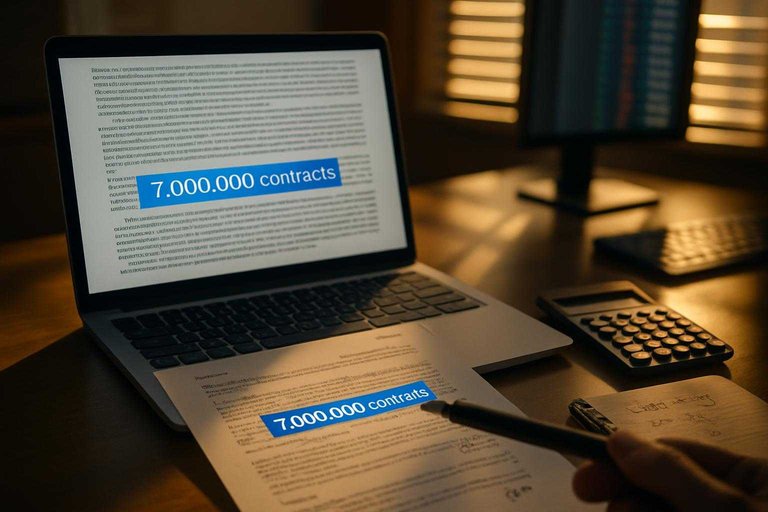
Check the position limit before you get attached to the number. A position limit (a platform-imposed maximum on how many contracts/shares you can hold in a contract/strike) can hard-stop a hedge. For Kalshi presidential-election contracts, the filing shows 7,000,000 contracts per strike per Member for Individuals/Entities, and 100,000,000 for an Eligible Contract Participant (ECP) (a regulatory category of sophisticated participant that may have higher position limits than retail individuals/entities on certain regulated venues) per the CFTC-filed position limits.
-
Check liquidity where you’d actually enter. If the visible order book near your intended price doesn’t show enough resting size for your share count, your “math hedge” becomes a “move-the-market” trade. That’s the line—if your size is big relative to displayed liquidity, reduce the hedge or be prepared to work the order in Step 6.
Step 6: Place orders
Build your entry like a hedger: in a $1/$0 event contract, every extra cent you pay is a cent you can’t recover at resolution.
-
Start with a limit price, not a market buy. Your limit should respect the tick size (the smallest allowed price increment, like $0.01), because you can’t “split the difference” inside it.
-
Choose maker vs. taker on purpose. A maker order adds liquidity by resting on the book (typically a limit order); a taker order removes liquidity by matching immediately. On Polymarket, the fee formula is fee = C × feeRate × p × (1 − p), and makers are never charged fees (only takers); Polymarket’s Politics category taker fee rate is 0.04 (per Polymarket’s trading fees documentation).
-
Know the “fee drag zone.” Because fees include p × (1 − p), they’re mathematically largest around mid-prices (near $0.50) and smaller near the extremes.
-
Use time-in-force to control fills. If your venue supports it, post-only prevents accidental taker fills; IOC (immediate-or-cancel) is for controlled, partial fills without leaving a resting order.
-
Place, then monitor the odds move. If the market runs away from your limit, re-price in tick-size steps rather than crossing the spread all at once; your goal is the hedge, not a perfect entry.
Step 7: Monitor and exit
-
Pre-write your rebalance triggers. Rebalance when the contract price moves enough that your payout at resolution no longer matches your Step 4 hedge target, or when your real-world exposure changes (the thing you’re hedging shrinks, grows, or disappears).
-
Track what matters: exposure first, odds second. Your hedge is tied to a dollar loss, not to being “right.” If the loss you were offsetting is gone, reduce or close.
-
Decide: take profits or hold. If you need liquidity before the event is finalized, plan to exit in the market. If you can hold, you can ride to resolution—on Polymarket, once a market is resolved, winning shares are worth $1 per share, losing shares become worthless, and trading is no longer possible (see: how prediction markets are resolved).
-
Know the hard stop. After resolution, trading is no longer possible; only the payout/redemption remains.
-
Compliance checklist (don’t get cute). Do not trade on insider/MNPI. Don’t trade based on your own candidacy/campaign or privileged campaign information. Platforms do enforce this: Kalshi publicly suspended a trader for 2 years and assessed a $20,397.58 penalty for insider-related violations. Separately, an enforcement summary describes a $2,246.36 penalty imposed on a political candidate for self-trading.
Match the contract to your risk
A presidential hedge isn’t “buy the candidate you fear” — it’s buying the specific event contract whose payout criterion matches the thing that actually hurts you, on a venue you can legally hold through resolution. If you don’t read and accept the rules text (including what exactly makes YES win and when trading stops), you’re not hedging your downside; you’re taking a position that can fail even if the headlines go your way. Once the definition matches your risk, size the hedge from the $1/$0 payoff and treat execution like cost control: every cent of entry price, spread, and taker fee directly reduces what the hedge can return. From there, manage it like insurance—rebalance when your exposure changes, and don’t do anything that turns a protective trade into a compliance problem.
Frequently Asked Questions
- Are presidential prediction markets considered gambling or regulated derivatives in the U.S.?
- Both framings exist: the CFTC has argued election contracts can be “gaming” and contrary to the public interest, while Kalshi has argued they’re legitimate derivatives for hedging and price discovery, and court filings have reflected that dispute.
- What is “Polymarket US,” and when can it start listing president market contracts?
- “Polymarket US” refers to a U.S.-focused venue described in a CFTC filing as a CFTC-registered DCM, with Products intended to list no earlier than April 9, 2026.
- Can I lose more than I deposit when I hedge with a president market on Kalshi?
- No—Kalshi describes its event contracts as fully cash-collateralized and states you will never have any debt with Kalshi, so your maximum loss is the funds you commit to the trade.
- How do I check the latest fees before placing a president market hedge?
- Open the platform’s current fee schedule and verify the effective date—Kalshi’s published fee schedule PDF shows an effective date of 2026-07-07, so you can confirm you’re pricing fees off the latest document.
- How do I find the best liquidity and price for the same president market outcome across platforms?
- Compare the same outcome side-by-side across venues and prioritize the one with the tightest spread and the deepest visible size near your target entry; MarketsPrediction is built for this with cross-platform odds, volume, and liquidity views in one place.