
 Best Platforms
 Live Odds








What Is a US Primary and How Does It Work?
A practical guide to what a U.S. primary actually decides — the three possible outputs of a primary, partisan nomination primaries vs top-two/top-four narrowing vs presidential delegate contests, open/closed/partially closed participation rules and party-affiliation deadlines, the unofficial-to-official path through canvass and certification, and a step-by-step checklist to look up your state’s exact rules.

You keep seeing “primary” in headlines and election markets and want to know what winning it really means. The problem is that the word sounds like a single, standard event, but the consequences can be completely different depending on where you are and what office is on the ballot.
Get it wrong and you can misread who actually advanced, who was even allowed to vote, whether a runoff is coming, or why “100% reporting” still isn’t final. This guide shows you what a primary does mechanically, how the main formats differ, and how to verify the exact rules for the contest you’re tracking.
What a primary does
A primary election is an election before the general election that selects party nominees, advances finalists, or allocates delegates—depending on the contest and state rules. The key is the decision it produces: it does not put someone in office; it determines who gets to move to the next stage.
A general election is the later election (often in November) where winners take office; primaries determine who appears on that ballot (or who advances). That’s why the phrase “primary in US” can describe different mechanics that all happen before the same end point: the general-election ballot. Unite America says 87% of the U.S. House was effectively elected in the 2024 primaries, and that 7% of Americans elected them.
Three possible outputs
What a primary “picks” depends on the office and the rules:
- A party nominee. In partisan contests, the primary selects which candidates will represent a political party in the general election.
- A narrowed field of finalists. In “top-two” or “top-four” formats, all voters get a ballot listing all candidates regardless of party, and the top two or four vote-getters advance to the general election—even if they share a party.
- Presidential delegates (not a direct nominee). In presidential primaries, voters are generally voting for party delegates, and states use the results to award delegates under party rules that vary by state and by party.
So “winning” might mean clinching a nomination, merely qualifying for the next ballot, or earning delegates that matter later.
Primary vs other stages
Primaries are usually run as elections by state and local election officials, even though a political party may host and administer primaries in certain circumstances. A caucus—a party-run meeting process (often local/precinct-level) used in some places to select preferences and allocate delegates instead of a primary ballot election—can lead to a nominee too, but it’s governed by party procedures rather than standard election administration.
Then come conventions and the general election. Conventions are party processes that can formalize nominations and delegate outcomes. And context matters: federal campaign-finance rules define “primary election” broadly enough to include not only pre-general elections that produce nominees under state law, but also presidential preference contests and delegate-selection events—and they treat a party caucus or convention as an election if it has the authority to select a nominee for federal office.
That’s the line: a primary is about who advances (or who gets delegates), not about who governs.
The three primary paths
In the U.S., “primary” is an umbrella word. What matters is which path the rules put you on—because that determines what your vote produces and what the next calendar step is.
Partisan nomination primaries
A partisan primary—a primary tied to political parties, typically used to choose each party’s nominee for the general election—ends with a clean handoff: each party gets its own winner, and those winners move forward as the party nominees.
That’s why you’ll see separate party ballots. The election is answering two different questions at once (“Who should be the Democratic nominee?” and “Who should be the Republican nominee?”), so the ballots are separated to keep those contests distinct. In some states with open partisan primaries, the U.S. Election Assistance Commission notes that voters may have to publicly declare which party ballot they want at the polling place, while other states let them choose privately in the voting booth.
If you’re reading results from this path, “won the primary” usually means “became the party’s general-election candidate.”
Top-two/top-four narrowing
A nonpartisan primary—a primary where candidates appear without party labels (or party is not used to determine who advances) and the field is narrowed by vote totals—works differently: it’s a sorting round, not a party nomination. This structure is also called a nonpartisan blanket primary.
In a top-two/top-four primary—a format where all candidates appear on one ballot and the highest vote-getters (two or four) advance to the general election even if they share a party—the key output is simply: who made the cut. There may be party-affiliated candidates on the ballot, but party doesn’t control who advances.
The practical tell is the headline: if the result is “the top two advance” or “the top four advance,” you’re looking at a narrowing primary, not a nominee-selection contest. The EAC groups some of these systems into an “other” bucket that accounts for 10% of states (as of 2025-12-23), which is a useful reminder that not every “primary” fits the classic party-nomination model.
Presidential delegate contests
Presidential primaries and caucuses are their own lane because you’re not directly electing an officeholder. You’re producing delegate math that later drives a party’s nomination.
A delegate—a person chosen to represent a state/party group at a national nominating convention; presidential primaries/caucuses often allocate delegates based on results—is the unit that “wins” the night. USAGov describes presidential primaries as secret-ballot preference votes that states use to award delegates, and it describes caucuses as party-run meetings (often at the county/district/precinct level) where people group by candidate and delegates are allocated based on caucus votes. USAGov also emphasizes that delegate allocation rules vary by state and are set by political parties at both the national and state level.
One more wrinkle: NCSL notes states often run different systems (and sometimes different dates) for presidential primaries versus their state primaries; and USAGov says most states hold presidential primaries 6–9 months before the presidential election. If the contest is for president, ask “How were delegates allocated?”—that’s what determines what happens next.
Why states diverge
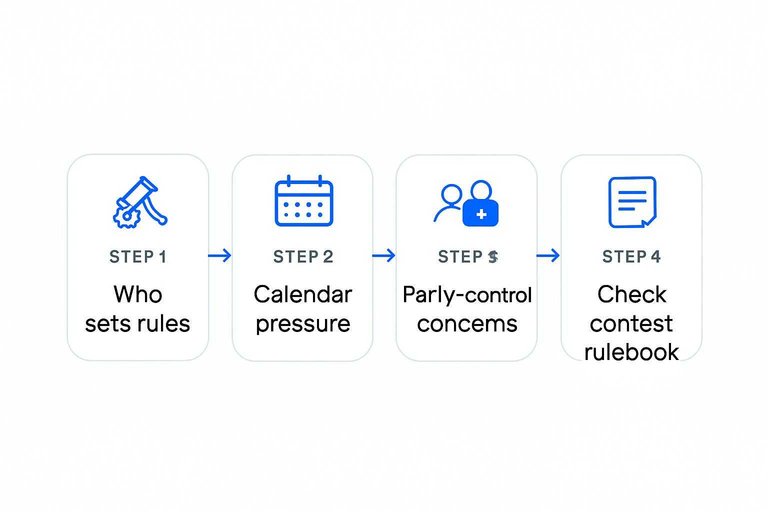
“Primary” is a timing label (“before the general election”), not a single standardized event. States can—and do—write different rulebooks depending on what the primary is for: picking a party nominee, narrowing to a top-two/top-four general-election ballot, or feeding a presidential process that’s really about delegate allocation.
The first driver is who sets the rules. State and local primaries are creatures of state election law. Presidential contests sit on top of that, with political parties adding their own delegate rules—so a state can keep one set of procedures for state offices and a different set for president.
The second driver is calendar pressure. Even among state primaries alone, dates swing widely: NCSL lists March 3 as the earliest 2026 state primary date and calls June the busiest month with 15 primaries. Meanwhile, the FEC’s compiled schedule shows New Hampshire’s 2026 congressional primary on 09/08/2026—another reminder that “primary season” isn’t one uniform window.
The third driver is party-control concerns, which show up as fine print. FVAP’s “semi-closed” category, for example, lets unaffiliated voters choose a party primary while party registrants are locked to their party’s ballot. And NCSL notes that closed-primary states often impose party-affiliation cutoffs to deter bad-faith “cross-over” switching—deadlines that range from one day (Connecticut) to around 139 days (Kentucky).
That’s why the safest move is always the same: identify which primary path you’re on, then read that contest’s date and rulebook, not the headline word “primary.”
Who can participate
Eligibility in a primary in US usually comes down to two things: (1) what kind of primary your state is running, and (2) what your voter registration said by the cutoff date.
An open primary—where voters generally don’t need to be registered with the party to participate (exact mechanics vary by state)—is the broadest gate. A closed primary—where only voters affiliated/registered with the party can vote in that party’s primary—puts party registration in the driver’s seat. A partially closed primary—where the party may decide whether unaffiliated voters can participate—sits between them. And a party affiliation deadline—a cutoff date by which you must affiliate with a party (or stop changing affiliation) to be eligible—can matter as much as election day itself.
The Election Assistance Commission groups 44% of states as having either an open partisan primary or one that’s open to unaffiliated voters (as of 2025-12-23).
| Primary access rule | Who can vote in a party primary | What ballot you can get | What to do before primary day |
|---|---|---|---|
| Open primary | Registered voters; party registration not required | Choose one party’s ballot | Verify rules; bring required ID |
| Closed primary | Only voters registered with that party | Only your registered party’s ballot | Be registered with the party by the deadline |
| Partially closed primary | Party members; unaffiliated voters only if allowed | Party ballot depends on status/party rule | Confirm whether unaffiliated voters are admitted |
| Open to unaffiliated voters (common variant) | Unaffiliated voters + party registrants (locked) | Unaffiliated choose; party members fixed | Decide status early; update registration if needed |
Deadlines are where people get surprised. NCSL’s party-affiliation deadline list shows that, in states with primaries “open to unaffiliated” voters, the cutoff is typically two to four weeks before the primary (as of 2026-01-20).
One more trap: labels don’t travel well. Official sources use different taxonomies for similar-but-not-identical rules, so you can’t safely infer eligibility from the words “open,” “semi-closed,” or “partially closed” without checking your state’s actual rulebook.
Unofficial to official: how a primary result becomes real
Election night is the first draft. The official result is a post‑election product.
Steps: from reported totals to certified outcomes
-
Election-night totals get reported (fast, but not final).
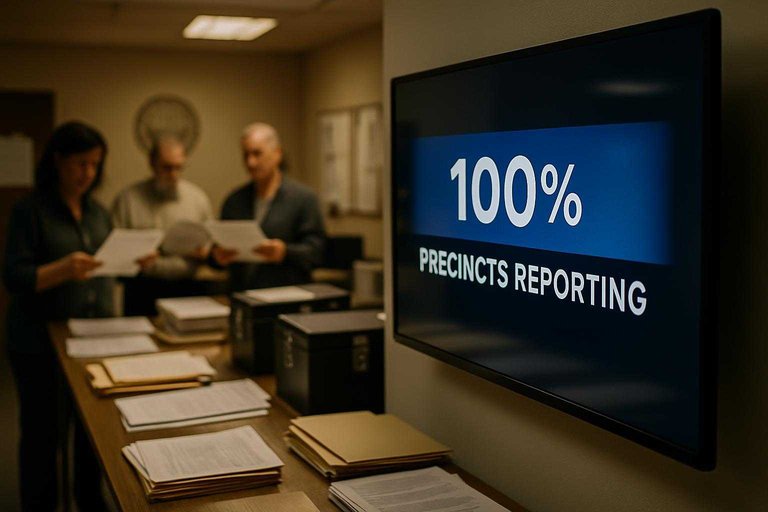
Local jurisdictions publish vote totals as precincts finish tabulating and reporting. You’ll often see banners like “100% precincts reporting,” but the Election Assistance Commission is explicit: even at “100%,” the numbers being shown are still unofficial and are never the final, certified results. -
Officials shift from reporting to checking.
Once the last precinct has reported, the job changes. Instead of “How many votes are in the system right now?” the question becomes “Do the returns add up and pass the required checks?” -
The canvass happens (this is where totals can move).
A canvass—the post‑election process of aggregating and validating returns (including adjudicating some ballot issues) that underpins official results—pulls results together across precincts and verifies them. If a ballot needs a decision under the rules, that decision lives here. -
Updated unofficial totals may be posted during the canvass.
This is the part that confuses people: the public can see numbers change after election night without anything “mysterious” happening. You’re watching the accounting get tightened before it’s locked. -
Certification makes the result official (and actionable).
Certification—the step where election officials formally attest the results are the true and accurate accounting of votes cast—turns the canvassed totals into the official result. That’s the version that controls legal outcomes (and is the cleanest reference point for market resolution). -
If the rules require a runoff, certification can be the trigger—not the finish line.
A runoff election is an additional election held when the rules say the primary didn’t produce a decisive outcome. In those cases, election night tells you who’s ahead; certification tells you whether the conditions for a runoff were met and who advances into it.
If you remember one thing: “100% reporting” describes reporting status, not whether the outcome is official.
When law says “primary”
In everyday news, “primary” is a catch‑all for “the vote before November.” In campaign‑finance law, it’s more functional: it’s the contest that decides a party’s nominee (or the decisive step that produces the people who will do that).
The Federal Election Commission (FEC)—the federal agency that enforces campaign‑finance rules—uses definitions in Title 11 of the Code of Federal Regulations. In 11 CFR 100.2, a “primary election” isn’t limited to a state-run, ballot-style primary. It can also include a party caucus, convention, or other meeting if that event has the authority to select the nominee.
That “authority” hook is why you’ll sometimes see the word “primary” used in legal filings or compliance guidance in ways that don’t match the headline calendar. If a party’s delegate-selection contest or nominating convention is the step that actually determines who becomes the party’s candidate, campaign‑finance rules may treat that step as the primary for legal purposes.
For presidential campaigns, there’s an additional regulatory layer in the public‑financing rules: 11 CFR 9032.7 also uses a legal definition of “primary election” tied to the nominating process rather than a single standardized election format. The takeaway is simple: in law, “primary” names the nominating decision—not the venue.
Look up your rules
Stop guessing. For any primary in US, do this once per contest (office + year), and you’ll have the exact rulebook you need.
-
Name the contest precisely.
Write: state, office (president vs U.S. House vs governor, etc.), party (if it’s partisan), and the election year. This prevents mixing up a presidential primary with your state primary. -
Find the authoritative election official (and save it).
Start with your state election office (often the Secretary of State) and your local/county election office. Record the official page URL and a phone number or help email. -
Confirm the primary date and the primary type from an official page.
Use the state’s published election calendar/notice as your “source of truth,” then cross-check discoverability via directories and summaries like USAGov and NCSL. -
Verify eligibility + deadlines in the same sitting.
On the official site, capture: registration deadline, party-affiliation rule (if any), whether unaffiliated voters can choose a party ballot, and any ID or mail/early voting rules. If you’re military or overseas, FVAP state guides help you find the right deadline pages fast. -
Record what matters for forecasting (not just voting).
Note what “winning” means (nominee vs advance-to-general vs delegates), the earliest date results could become official (look for canvass/certification info; the EAC has primers on what those steps are), and any runoff or recount trigger.
Once you’ve pinned down the exact outcome your state’s rules produce, MarketsPrediction lets you compare cross-platform odds and activity for that specific primary result.
Stop treating “primary” as one thing
A U.S. primary doesn’t put anyone in office—it decides who advances (or how delegates are allocated), and that “win” can mean nomination, making a top-two/top-four cut, or stacking delegate math for later. The only reliable way to read a headline or a market is to identify which kind of primary you’re looking at and who was actually allowed to participate under that state’s registration and party‑affiliation rules. And don’t confuse fast reporting with finality: even “100% reporting” can still be unofficial until the canvass is complete and results are certified. If you do one thing first, pull up the official election office page for that specific contest and capture the date, the primary type, the eligibility cutoff, and when the outcome becomes official.
Frequently Asked Questions
- If a race shows “100% precincts reporting,” is the primary result official?
- No—“100% precincts reporting” only means all precincts have reported, not that the outcome is final. The result becomes official only after the canvass and certification steps are completed.
- How far in advance do I need to change party registration to vote in a primary in the US?
- Plan for the party-affiliation deadline to hit before primary day—NCSL lists a typical window of two to four weeks in states that are “open to unaffiliated” voters, and the shortest example is one day (Connecticut). Check your state election office for your exact cutoff for the specific contest.
- When the FEC says “primary election,” does it only mean a state-run primary on the ballot?
- No—the FEC’s regulations use “primary election” as a nominating-process concept, not a single standardized event format. For presidential rules, 11 CFR 9032.7 ties “primary election” to the nomination process rather than a specific ballot-style election.
- How do I quickly find my state’s primary rules and deadlines without reading a bunch of news explainers?
- Start with your state election office for the official calendar and eligibility rules, then cross-check the date/type in directories like USAGov and NCSL. If you’re military or overseas, use FVAP’s state guides to jump straight to the right deadline pages.
- How can I track “who’s favored” in a primary in the US across multiple prediction market platforms?
- Use a cross-platform comparison view so you can see implied odds and activity for the same primary outcome side-by-side instead of relying on one venue’s price. MarketsPrediction aggregates live odds, volume, and liquidity across multiple platforms for faster market scanning.